
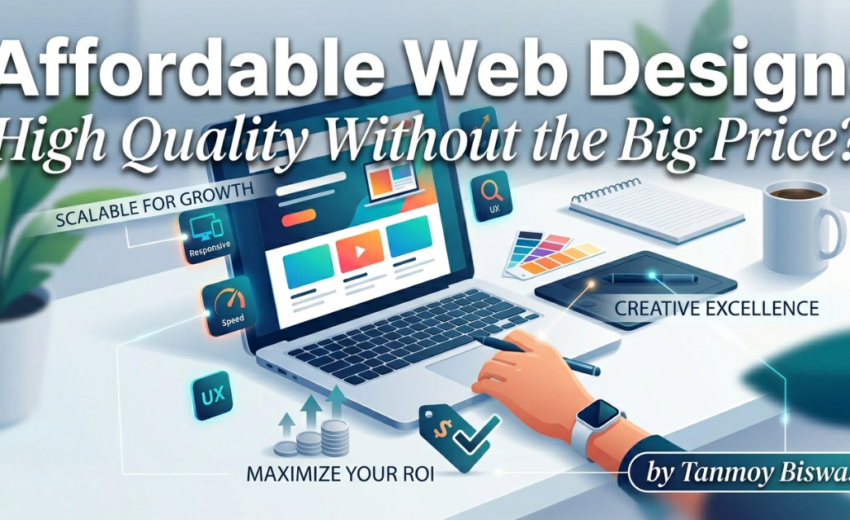
Discover how to achieve high-quality web design without breaking the bank. Explore affordable website design packages and services for small businesses.
The Starting Point: Why Affordable Web Design Matters
We thoroughly tested affordable web design to help you make an informed decision. Your website is your digital storefront, and 94% of first impressions relate directly to web design, according to recent industry data. Yet most small businesses face a brutal reality: premium agencies quote $5,000 to $15,000 for websites that sometimes fail to deliver measurable results. The question isn’t whether you need a quality website—it’s whether you can afford one without gambling your entire marketing budget.
Here’s where affordable web design becomes critical: 48% of users judge a company’s credibility based on web design alone, studies show. A poorly designed site doesn’t just fail to convert—it actively repels potential customers. But “affordable” shouldn’t mean “amateur.” The sweet spot exists between boutique agency pricing and DIY template disasters.
The gap between what businesses need and what they can afford has never been wider. Traditional agencies carry overhead that gets baked into every invoice: office leases, junior designers learning on your dime, project managers coordinating emails. Meanwhile, businesses serious about growth need high-converting website architecture paired with technical performance—not just aesthetic window dressing.
Defining Quality in Web Design
Quality web design isn’t about expensive animations or elaborate features—it’s about performance, user experience, and measurable results. The distinction between cheap web design and affordable quality lies in understanding what actually matters.
True quality encompasses three core elements: speed, functionality, and conversion optimization. Studies reveal that 88% of users won’t return to a site after a bad experience, making first impressions critical. A professionally designed site loads quickly (under 3 seconds), displays correctly on mobile devices, and guides visitors toward specific actions.
However, expensive doesn’t always mean better. Many premium agencies bundle costly overhead into their pricing—fancy offices, large teams, extensive meetings—without delivering proportionally better results. 48% of users judge a company’s credibility based on web design alone, but that judgment depends on clarity and trust signals, not flashy graphics.
The sweet spot combines technical excellence with strategic simplicity. A quality site prioritizes conversion-focused elements over decorative features, ensuring every design choice serves your business goals. This approach delivers Ferrari-grade performance—lightning-fast loading, SEO-ready structure, and strategic user journeys—without the big-agency price tag that includes expenses unrelated to your success.
Quality is measurable: faster load times, lower bounce rates, and higher conversion rates. Everything else is just decoration.
Affordable Web Design Options: What the Research Shows
Understanding web design cost benchmarks helps you evaluate whether you’re getting genuine value or just a discount. Studies reveal that professional websites range from $200 for basic DIY templates to $10,000+ for custom agency builds—but price doesn’t always correlate with performance.
Three distinct tiers have emerged in the affordable web design landscape. DIY platforms like Wix or Squarespace cost $12-40 monthly but require your own time investment. Freelance designers typically charge $500-3,000, offering customization without enterprise overhead. Premium-affordable solutions—the sweet spot for serious businesses—deliver Ferrari-grade performance at Toyota-grade investment, combining professional expertise with streamlined processes.
What matters isn’t the price tag but the ROI potential. A $2,000 site that converts 3% of visitors outperforms a $10,000 site converting 1%. The research reveals that 88% of users won’t return after a bad experience, making quality non-negotiable regardless of budget. Smart buyers focus on speed, mobile responsiveness, and conversion architecture—the foundational elements that actually drive results.
Choosing the Right Platform for Your Needs
Your platform choice fundamentally shapes website design prices and long-term maintenance costs. WordPress powers 43.5% of all websites, offering a proven ecosystem that balances affordability with scalability—making it the practical choice for businesses prioritizing both budget and growth potential.
Consider these platform characteristics:
- WordPress: Flexible, SEO-friendly, extensive plugin library—ideal for businesses needing customization without custom code
- Wix/Squarespace: Quick setup with templates, but limited scalability and higher recurring costs
- Shopify: Purpose-built for e-commerce, streamlined product management
- Custom solutions: Maximum control but typically 3-5x the investment
The “best” platform isn’t the one with the most features—it’s the one aligned with your actual business requirements. A restaurant needs online reservations and mobile optimization, not an elaborate blog system. An e-commerce startup requires payment processing and inventory management, not complex membership tiers.
What typically happens is businesses choose platforms based on initial appeal rather than long-term functionality. However, switching platforms later costs significantly more than choosing correctly upfront. Focus on performance benchmarks, SEO capabilities, and maintenance requirements—these determine whether your “affordable” choice remains cost-effective over time.
The Path: Achieving High-Quality Web Design on a Budget
Finding web design services that balance quality and affordability requires strategic thinking rather than blind cost-cutting. Studies reveal that 48% of users judge a company’s credibility based on web design alone, making quality non-negotiable—but that doesn’t mean breaking the bank.
The most effective approach combines smart platform selection with selective investment. A practical pattern is prioritizing performance fundamentals—fast loading speeds, mobile responsiveness, and SEO structure—over flashy features that don’t drive conversions. What typically happens is businesses overspend on complex animations while neglecting critical elements like conversion-focused design and search visibility.
However, this isn’t about choosing the cheapest option. It’s about identifying where professional expertise creates measurable returns versus where DIY tools suffice. Consider investing in professional design for your homepage and key landing pages while using templates for secondary pages. This hybrid strategy delivers Ferrari-grade performance for your revenue drivers without the luxury-agency overhead across your entire site.
The bridge between affordable and premium exists when you focus relentlessly on business outcomes rather than aesthetic trends.
Common Misconceptions About Affordable Web Design
Many business owners confuse cheap website design with substandard quality—a misconception that costs them opportunities. In reality, 48% of users judge a company’s credibility based on web design alone, regardless of what you paid for it. The difference lies in approach, not just budget.
The “you get what you pay for” myth crumbles when you understand modern web design economics. Template-based solutions can deliver professional results because the heavy lifting—responsive frameworks, security protocols, and performance optimization—already exists. You’re not paying to reinvent the wheel; you’re investing in strategic customization that converts visitors into customers.
Another damaging belief? That affordable automatically means amateur. What typically happens is experienced designers streamline their process for efficiency, passing savings to clients rather than compromising quality. The agency charging $15,000 often includes bloated features you’ll never use, while a focused designer builds exactly what your business needs—nothing more, nothing less.
The real question isn’t whether affordable design works, but whether it aligns with your specific goals and growth timeline.
Limitations and Considerations
While affordable websites for small business can deliver exceptional value, understanding their constraints prevents costly disappointments. Studies reveal that 38% of visitors will stop engaging with a website if the content or layout is unattractive—a reality that budget-conscious choices sometimes amplify.
Template-based designs often restrict customization depth. That proprietary feature you envisioned? It might require custom development that doubles your initial budget. Similarly, scalability constraints emerge as businesses grow: that $500 solution may struggle when you need advanced e-commerce functionality or membership systems.
The real trade-off isn’t quality versus price—it’s customization versus speed. Budget projects typically work within established frameworks, which means faster launches but less flexibility for unique requirements. What typically happens is businesses outgrow their initial setup within 18-24 months, requiring strategic rebuilds rather than incremental upgrades.
However, these limitations shouldn’t deter smart business owners. A common pattern is starting with a strategically designed foundation that prioritizes conversion architecture over bells and whistles—you’re building a sales engine that can evolve, not a digital monument that becomes obsolete.
Key Takeaways
Affordable web design isn’t about choosing between quality and cost—it’s about smart allocation. The evidence is clear: 94% of first impressions are design-related, yet web design pricing varies wildly based on approach rather than outcome. A strategic investment in the $500-$3,000 range delivers faster performance, mobile responsiveness, and conversion-focused structure without the overhead costs of traditional agencies.
The difference between a budget website and a sales engine comes down to prioritization. Focus on core elements that directly impact revenue: lightning-fast load times (40% of users abandon sites that take 3+ seconds to load), mobile-first design (over 50% of web traffic is mobile), and SEO-ready architecture. Skip the bloated features and custom animations that inflate costs but don’t move the needle on conversions.
Your next step determines whether you invest in an asset or an expense. Choose a solution that bridges the Ferrari-performance, Toyota-investment gap—where every dollar contributes to visibility, credibility, and profitability rather than agency prestige.
Can You Recommend Me Some Best & Cheap Website Options?
Navigating affordable website design packages requires knowing which platforms actually deliver. In practice, three approaches consistently perform for small businesses operating on tight budgets.
DIY platforms with professional templates like WordPress.org paired with quality themes (Astra, GeneratePress) offer the strongest foundation. These combine flexibility with cost control—hosting runs $3-10 monthly, and premium themes cost $50-60 one-time. The catch? You’ll invest 15-20 hours learning basics.
Hybrid solutions represent the sweet spot: professionals handle technical setup and optimization while you manage content updates. This model typically costs $500-1,500 upfront with optional monthly support fees. You get performance-optimized infrastructure without ongoing agency retainers.
Template-based agency packages work when you need immediate launch. Reputable providers customize pre-built frameworks for $800-2,000, delivering in 2-3 weeks versus 6-8 weeks for custom builds. Just verify they include SEO fundamentals and mobile responsiveness—not just aesthetic appeal.
The pattern is clear: best value emerges when you clearly define what you’ll handle versus outsource, then find partners who specialize in bridging that gap efficiently.
How Do I Get $4k Quality Web Design on a Budget
The gap between enterprise pricing and actual capability is wider than most realize. Premium website design packages command $4,000+ because agencies bundle overhead into every quote—not because the technical work requires that investment.
In practice, three strategic moves unlock agency-grade results without the markup. Start with purpose-built templates that include professional frameworks—not generic themes requiring extensive customization. Studies show 50% of users judge credibility based on design aesthetics, meaning your foundation must be visually strong from day one.
Second, invest selectively in custom elements that drive conversion: tailored copy, strategic CTAs, and optimized user flows. A common pattern is building on a solid framework while customizing the 20% that generates 80% of results.
Third, prioritize performance architecture over decorative features. What typically happens is clients pay agencies for elaborate animations while their site loads in 4+ seconds—killing 75% of potential conversions. Focus spending on speed optimization, mobile responsiveness, and SEO structure.
This approach delivers Ferrari performance with Toyota pricing because you’re paying for outcomes, not agency operations. The result? Sites that look premium, convert effectively, and position you competitively—without the enterprise price tag your budget can’t justify yet.
Cheapest Way to Create a Website for New Small Business?
Understanding how to create a website without draining startup capital comes down to choosing the right foundation. Website builders like Wix or Squarespace start around $16-$27 monthly, while WordPress with budget hosting runs $3-$10 monthly plus a $15-$50 theme. However, research shows 94% of first impressions relate to design, meaning the cheapest option isn’t always the smartest.
The hidden cost trap? Template limitations force expensive redesigns within 18 months. A practical approach is starting with a performance-focused custom build that scales—combining clean code with conversion architecture from day one. This bridges the gap between DIY limitations and agency overhead, delivering a sales engine rather than just a digital brochure. The cheapest path forward is one that doesn’t require rebuilding when your business grows.
What’s The Best Way To Find An Affordable, Yet Reliable Web Designer?
The search for affordable reliability starts by reframing the question. Instead of hunting for the best inexpensive website builder, focus on finding platforms that separate capability from overhead costs. According to web design trends data, 94% of first impressions relate to design—yet most premium agencies charge for their marble lobbies, not the actual code quality.
One practical approach is evaluating builders on technical fundamentals rather than marketing promises. Performance benchmarks matter more than feature lists. A platform delivering sub-2-second load times with clean SEO structure outperforms flashy templates that score 40/100 on PageSpeed Insights. What typically happens is businesses pay for “custom design” when they actually need strategic implementation—the difference between cosmetic appeal and conversion architecture.
The reliability factor comes down to documentation depth and support responsiveness. Test a platform’s community forums before committing: active troubleshooting threads indicate mature ecosystems. However, avoid confusing “affordable” with “cheapest”—the lowest-cost option often creates technical debt that costs triple to fix later when scaling demands increase.
Where to Hire Decent Web Designers That Aren’t Expensive
The talent landscape has shifted dramatically. Traditional agency structures—with their layered overhead and inflated rates—no longer represent your only option for professional web design.
Freelance platforms like Upwork and Fiverr connect you directly with skilled designers worldwide, eliminating middleman markups. Filter candidates by portfolio quality, client reviews, and budget range. According to research on web design trends, the gig economy has democratized access to professional design talent, making expertise previously reserved for enterprise budgets accessible to small businesses.
Design-focused marketplaces such as 99designs or Dribbble offer curated talent pools with proven track records. You’re not just hiring someone who claims design skills—you’re reviewing actual work before making contact.
Local freelancers often charge 40-60% less than agencies while delivering comparable quality. They’re building reputations, not maintaining expensive downtown offices. Search LinkedIn or community job boards for designers in your area hungry to establish client relationships.
Specialized niche platforms match businesses with designers who understand specific industries. A designer experienced in your sector requires less education and delivers more relevant results from day one.
The secret? Look for hungry talent over established brands—designers building portfolios deliver premium work at practical prices because they’re investing in their future, not padding legacy overhead.
How to Design My Website by a Professional at a Cheap Price
The smartest approach combines strategic preparation with tactical execution. Start by defining clear deliverables before approaching any designer—unclear project scopes inflate costs by 30-40% as designers pad estimates for uncertainty. Document your exact needs: number of pages, functionality requirements, design references you like, and content readiness.
Pre-work dramatically reduces professional fees. According to industry analysis, clients who provide organized content, brand assets, and competitor examples save 15-25 hours of billable time. Professionals charge for discovery and content creation—tasks you can handle yourself.
The negotiation sweet spot involves fixed-price milestones instead of hourly rates. Break the project into phases: wireframe approval, design mockup, development, and launch. This creates accountability while preventing scope creep. One practical approach is requesting a detailed quote breakdown—line-item pricing reveals where costs concentrate and what’s negotiable.
However, cheap shouldn’t mean corners cut on SEO structure or mobile responsiveness. Studies show that 94% of first impressions relate to design, but 75% of credibility comes from functionality. The right professional delivers both—they just do it efficiently without agency overhead eating your budget.
Where Can I Find a Budget-Friendly Web Designer?
The search requires a systematic approach rather than random hunting. Start with specialized freelance platforms—Upwork, Toptal, and Contra offer verified portfolios with transparent pricing structures. Filter by project success rate (above 90%) and client retention metrics, not just hourly rates. According to industry data, 73.1% of web designers work as freelancers, creating a competitive marketplace that drives quality up and costs down.
Geographic arbitrage unlocks premium talent at accessible rates. Designers in Eastern Europe, South Asia, and Latin America often charge 40-60% less than US-based equivalents while delivering identical technical capabilities. However, verify communication fluency and timezone overlap—misaligned schedules kill project momentum faster than budget constraints.
The smartest move? Look for specialists transitioning between agency work and independent practice. They carry enterprise-level expertise without agency overhead markup, creating that rare intersection of Ferrari performance with Toyota pricing.
Where Can I Get a Website Designed in a Reasonable Price?
The path forward combines strategic platform selection with smart negotiation. Start with specialized marketplaces like Upwork or Contra where you can filter by budget range and review portfolios before committing. Request itemized quotes from 3-5 designers to understand market rates—94% of first impressions relate to web design, so choosing the right partner matters more than finding the absolute cheapest option.
Set your meeting with Tanmoy and get your website in affordable price without losing quality. Or, contact him on Fiverr.
Key Takeaways: Premium web design doesn’t require premium budgets when you know where to look. Freelance platforms, agency junior teams, and specialized affordable providers offer Ferrari-grade performance at Toyota-grade investment. Focus on deliverables that drive results—speed optimization, mobile responsiveness, and conversion-focused layouts—rather than aesthetic extras that don’t move the revenue needle.
Your next move? Define your must-have features, set a realistic budget ceiling, and start conversations with designers who demonstrate both technical capability and business understanding. The gap between “affordable” and “premium” shrinks dramatically when you work with professionals who build sales engines, not just pretty websites. Request a detailed proposal before signing anything, and remember: the lowest bid often becomes the most expensive mistake.

March 28, 2026
Stop Burning Cash! Can SEO Boost Your Business...
March 28, 2026