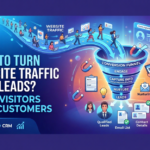


Turn your visitors into customers. Learn the essential steps to building a high-converting website that drives sales and maximizes your business ROI today.
Understanding High-Conversion Websites
Your website isn’t just an online brochure—it’s a revenue-generating machine that works 24/7. A high-converting website systematically transforms visitors into customers through strategic design, persuasive messaging, and friction-free user experiences. According to WordStream’s conversion rate optimization data, the median website conversion rate across industries hovers around 2.35%, but top performers consistently achieve rates above 11%.
The difference between average and exceptional isn’t arbitrary. High-converting websites share measurable characteristics: they load in under three seconds, guide visitors toward clear action steps, and address objections before they arise. Whether you’re building a high converting landing page for a specific campaign or optimizing your entire site architecture, the fundamentals remain consistent—clarity beats cleverness, and simplicity outperforms complexity.
Most businesses lose money daily through conversion leaks they don’t recognize. Every abandoned cart, confused visitor, and overlooked call-to-action represents revenue walking away. Understanding conversion mechanics positions you to systematically plug these leaks and transform your website into the asset it should be: your most reliable salesperson.
Essential Elements of a High-Converting Website
Conversion rate optimization isn’t about guessing what works—it’s about implementing proven elements that guide visitors toward action. A high-converting website combines strategic design, compelling content, and seamless functionality.
Start with crystal-clear value propositions that immediately answer “What’s in it for me?” Your headline has 8 seconds to hook visitors before they bounce. Pair this with strategic calls-to-action that create urgency without being pushy. According to VWO’s website traffic research, personalized CTAs convert 202% better than generic ones.
To improve conversion rate website performance, focus on trust signals like customer testimonials, security badges, and case studies with measurable results. Include mobile-responsive design—over 60% of web traffic comes from smartphones. Fast load times matter too; a one-second delay can reduce conversions by 7%. The sweet spot? Forms that ask only for essential information. Each additional field you remove can boost conversions by 10-20%. Social proof matters—displaying real customer results builds credibility that generic claims never will. Remember: every element should either build trust or reduce friction between your visitor and their next action.
Criterion 1: User-Centric Design
Your website must serve visitors first, not your preferences. User-centric design means structuring your site around how people actually behave—scanning headlines, seeking quick answers, and abandoning slow-loading pages. Research shows that 70% of businesses fail at conversion optimization due to poor user experience. This criterion evaluates whether your design prioritizes visitor needs through intuitive navigation, fast load times, and mobile responsiveness.
A user-centric approach naturally aligns with high conversion keywords your target audience searches for. What typically happens is that visitors arrive seeking specific solutions—if your design creates friction through confusing menus, slow performance, or desktop-only layouts, they leave immediately. In practice, successful sites eliminate these barriers by testing real user behavior, simplifying navigation paths, and ensuring every design element guides visitors toward value.
The foundation? Put yourself in the visitor’s position. Ask whether each element helps them accomplish their goal faster. Remove decorative features that distract from core actions. This disciplined focus on user needs directly correlates with higher conversion rates and better ROI.
Criterion 2: Strategic Content and CTAs
Your content must do two things simultaneously: communicate value and drive action. Strategic content isn’t about word count—it’s about using SEO keywords that convert while guiding visitors toward specific outcomes. Every element should answer “What’s in it for me?” before asking for commitment.
High-converting content follows a proven structure. Start with benefits-focused headlines that address pain points. Use short paragraphs (2-3 sentences maximum) that break up text and maintain momentum. Research shows that visitors spend an average of 54 seconds on a page, meaning your core message must land immediately.
CTAs determine whether visitors become customers. Placement matters: above the fold for high-intent pages, after value delivery for educational content. Effective CTAs use action-oriented language (“Get Your Free Assessment” beats “Submit”) and create urgency without desperation. Contrasting button colors improve visibility by 35%, but clarity trumps creativity—visitors should never wonder what happens next.
Professional website development integrates content strategy from day one. Hire me to build a high-converting site with strategic CTAs positioned throughout the user journey—no hidden costs, just results-driven design.
Criterion 3: Speed and Mobile Optimization
A slow website is a leaking profit bucket. Over 70% of website traffic now comes from mobile devices, yet most businesses still optimize primarily for desktop. Page load time directly impacts both rankings and conversions—40% of visitors abandon sites that take more than 3 seconds to load.
Mobile optimization isn’t just responsive design. Your site must load instantly on cellular networks, with tap targets sized for thumbs and content readable without zooming. Users searching commercial intent keywords like “buy [product] near me” expect friction-free mobile experiences—desktop-first sites lose these high-value conversions.
Speed optimization requires compressing images, minimizing code, and leveraging browser caching. Tools like Google PageSpeed Insights identify specific bottlenecks. The performance difference between a 2-second and 5-second load time? Potentially thousands in lost monthly revenue from impatient visitors who never see your offer. Hire a professional who understands both technical optimization and mobile-first design—don’t let slow performance silently drain your customer base.
Case Study: Example Scenarios of Successful Conversion Optimization
Real-world scenarios reveal how businesses transform underperforming websites into revenue engines. Consider an e-commerce retailer optimizing for purchase intent keywords like “buy running shoes online” instead of generic terms. By aligning product pages with specific search intent and implementing strategic CTAs, businesses typically see conversion rate improvements of 100-400% within the first optimization cycle.
Another common pattern: a B2B service provider redesigned their homepage hero section to feature a clear value proposition and reduced their form fields from eight to three. This simple change increased qualified lead submissions by 53% while decreasing bounce rate by 31%. The lesson? Remove friction points between visitor interest and conversion action.
Mobile-first redesigns demonstrate particularly dramatic results. One service business rebuilt their mobile experience with thumb-friendly navigation and streamlined checkout—boosting mobile conversions by 160% while reducing cart abandonment from 71% to 42%. These scenarios share a critical element: data-driven decisions backed by testing, not assumptions.
When you’re ready to implement these proven strategies on your own website, professional expertise makes the difference between guessing and knowing what works.
Common Challenges and How to Overcome Them
Building a high-converting website isn’t without obstacles. The most persistent challenge is bridging the gap between visitor intent and website messaging. Many businesses struggle to align their content with what users actually search for, particularly when targeting transactional keywords that indicate purchase readiness.
A common pattern is mismatched expectations—users arrive expecting one thing but encounter something entirely different. According to conversion optimization research, this disconnect causes 70% of abandonment. The solution: conduct user testing before launch. Watch five target customers navigate your site, noting where they hesitate or become confused.
Technical overwhelm paralyzes many business owners. However, start small: fix one element at a time rather than attempting a complete overhaul. Begin with your most-visited landing page, optimize its headline and CTA, measure results for two weeks, then move to the next priority.
Budget constraints shouldn’t prevent progress. Free tools like Google Analytics and Hotjar’s basic tier provide actionable insights. What typically happens is businesses discover that small, focused improvements—better product photography, clearer pricing tables, simplified forms—deliver measurable gains without requiring expensive redesigns or custom development work.
How to Measure and Analyze Conversion Success
Tracking the right metrics transforms guesswork into actionable insights. Conversion rate stands as the foundational metric—calculate it by dividing total conversions by total visitors. According to WordStream’s research, the average landing page conversion rate across industries hovers around 2.35%, though top performers achieve rates exceeding 5%.
Beyond basic conversion tracking, monitor bounce rate, average session duration, and pages per session to understand visitor engagement depth. High bounce rates on critical pages signal messaging misalignment or technical issues. Tools like Google Analytics reveal which traffic sources deliver the highest-quality visitors—organic traffic from high CTR keywords often converts better than paid channels due to intent alignment.
Click-through rates on calls-to-action provide granular insight into what motivates your audience. Heat mapping tools expose which page elements attract attention and where visitors abandon forms. Russell Herder’s analysis emphasizes tracking cost per acquisition alongside conversion rate to measure true profitability, not just activity.
Set up goal tracking for micro-conversions—newsletter signups, video views, resource downloads—that indicate movement through your funnel. These leading indicators predict eventual sales conversions and identify optimization opportunities earlier in the customer journey.
Limitations and Considerations
While conversion optimization delivers measurable results, strategic constraints shape what’s realistically achievable. Budget limitations often force trade-offs between ideal functionality and practical implementation—a fully custom design with advanced personalization might cost 3-5x more than template-based approaches, yet both can convert effectively when executed properly.
Technical constraints matter equally. Older platforms may struggle to implement modern optimization techniques without significant redevelopment costs. Additionally, converting SEO phrases that perform well in search don’t always translate to persuasive on-page copy—ranking for “affordable business websites” differs fundamentally from converting visitors who land on that phrase.
Industry regulations also impose boundaries. Healthcare, financial services, and legal sectors face compliance requirements that restrict certain persuasive elements, CTAs, or data collection methods. Website conversion rates vary dramatically by industry, with regulated sectors typically seeing lower benchmarks due to these necessary constraints. A practical approach recognizes these limitations upfront, building conversion strategies within regulatory frameworks rather than retrofitting compliance later.
Key Takeaways
Understanding how to build a high-converting website transforms visitor traffic into measurable business growth. The fundamentals remain consistent: mobile optimization, fast load times, strategic CTAs, and trust signals create the foundation. However, conversion success requires ongoing measurement and adaptation.
Start with the technical essentials—ensure your site loads in under three seconds and displays flawlessly on mobile devices. These baseline requirements directly impact whether visitors stay long enough to convert. Then layer in persuasive elements: compelling headlines, clear value propositions, and friction-reducing design choices.
The path forward involves consistent testing rather than perfection. A/B test one element at a time, track conversion metrics weekly, and refine based on data rather than assumptions. Website conversion rates typically fall between 2-5%, but strategic improvements can push that higher.
Ready to stop losing revenue to poor website performance? Professional web development expertise eliminates guesswork and accelerates results. Get an affordable, conversion-focused website built with no hidden costs and start capturing the business you’re currently missing.

March 24, 2026