

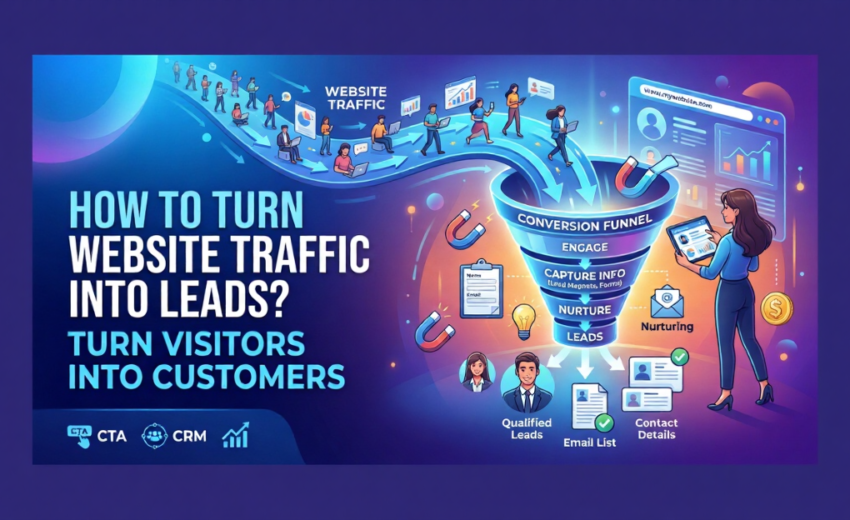
Struggling to convert website traffic into leads? Discover proven strategies to turn visitors into qualified leads and grow your business faster.
Why Converting Website Traffic into Leads Matters
The average website conversion rate hovers around just 2-3%, yet top-performing companies achieve rates of 10% or higher. This gap reveals a fundamental truth: attracting visitors is only half the battle. The real challenge lies in transforming anonymous browsers into engaged prospects who provide their contact information and express genuine interest in your offerings.
When done effectively, lead conversion transforms your website from a digital brochure into a powerful revenue-generating asset. Each converted visitor represents potential long-term value, with studies showing that companies excelling at lead nurturing generate 50% more sales-ready prospects at 33% lower cost.
The following guide will walk you through proven strategies and practical techniques to maximise your conversion potential, starting with the essential foundations you’ll need in place.
Sources:
What You Need to Get Started
Before diving into specific tactics, establishing the proper foundation is crucial for successful lead conversion. You’ll need several key components in place to transform casual browsers into qualified prospects
.
Essential technical infrastructure forms the backbone of any conversion strategy. This includes a reliable website analytics platform to track visitor behaviour, lead capture forms integrated with your CRM system, and email marketing tools for nurturing prospects.
According to recent data, companies with robust lead generation systems see 133% more revenue compared to those without proper infrastructure. Content assets serve as your primary conversion tools. You’ll need compelling lead magnets—such as ebooks, whitepapers, and or exclusive guides—that provide genuine value in exchange for contact information.
These resources should address specific pain points your target audience faces. Finally, clear conversion goals guide your entire strategy. Whether you’re aiming for newsletter subscriptions, demo requests, or consultation bookings, defining these objectives upfront ensures every element of your site works cohesively toward lead conversion success.
With these foundations established, you’re ready to optimize the specific touchpoints where visitors make their crucial decision to engage.
Sources:
Step 1: Optimise Your Landing Pages
Your landing pages serve as the critical bridge between anonymous visitors and qualified inbound leads. With the foundation elements now in place, the first actionable step involves transforming these pages into conversion powerhouses that compel visitors to take meaningful action.
Page speed emerges as the fundamental factor—research shows that pages loading in under two seconds achieve conversion rates of 9%, whilst those taking longer than five seconds see rates plummet to just 2%. This dramatic difference underscores why technical optimisation must precede design considerations.
Beyond speed, your landing pages require laser-focused messaging that addresses specific visitor intent. Remove navigation menus, eliminate distracting links, and maintain singular focus on your conversion goal. Companies using dedicated landing pages generate 55% more leads than those directing traffic to generic homepage destinations.
The visual hierarchy should guide eyes naturally toward your lead capture form, utilising whitespace strategically and positioning key elements above the fold. However, optimisation extends beyond aesthetics—your page must immediately communicate value whilst building trust through testimonials, security badges, and clear privacy statements.
With optimised landing pages establishing the foundation, the next critical element involves crafting compelling calls-to-action that motivate visitors to convert.
Designing Effective Calls-to-Action (CTAs)
Well-crafted calls-to-action serve as the pivotal moment where visitors decide whether to engage further with your brand. The placement, design, and messaging of your CTAs directly influence your lead conversion rate, making them essential components of any traffic-to-lead strategy.
CTA positioning plays a crucial role in capturing attention at the right moment. Above-the-fold placement ensures immediate visibility, whilst strategic positioning throughout your content allows you to capture interest as it builds. Research indicates that websites with 10-15 landing page CTAs see a 266% increase in leads, demonstrating the power of multiple touchpoints.
The language within your CTAs should create urgency whilst remaining clear about the value proposition. Action-oriented phrases like “Download Your Free Guide” or “Start Your Assessment” perform better than generic “Submit” buttons because they communicate specific benefits.
Visual design elements significantly impact CTA effectiveness. Contrasting colours that stand out from your page design, appropriate button sizing, and whitespace around the element all contribute to higher click-through rates. However, the most compelling CTA design means little without strategic placement that aligns with your content flow and visitor journey.
With optimised CTAs driving traffic to your conversion points, the next critical element involves creating irresistible offers that compel visitors to exchange their contact information.
The Role of Lead Magnets in Conversion
Lead magnets serve as the cornerstone of effective website conversion, offering visitors something valuable in exchange for their contact information. These strategic offerings bridge the gap between casual browsing and genuine engagement, transforming anonymous traffic into identifiable prospects.
Effective lead magnets address specific pain points whilst delivering immediate value. Whether through comprehensive guides, exclusive templates, or industry insights, they create a compelling reason for visitors to share their details. The key lies in ensuring the perceived value exceeds the perceived cost of providing contact information.
Research indicates that companies using lead magnets see significantly higher conversion rates compared to those relying solely on basic contact forms. However, success depends heavily on relevance and timing – the right offer must reach the right visitor at precisely the moment they’re ready to engage.
Lead magnet effectiveness hinges on strategic placement and clear value proposition communication. Whilst quality content attracts visitors, well-crafted lead magnets convert them into actionable prospects, setting the stage for meaningful engagement through direct communication channels.
Sources:
Step 2: Engage Visitors with Real-Time Communication
Real-time communication tools transform passive website visits into active conversations, creating immediate opportunities for lead generation. Live chat systems, chatbots, and messaging widgets provide instant access to your expertise whilst visitors are actively engaged with your content.
The timing advantage proves crucial—research indicates that responding to leads within five minutes increases conversion rates by 900%. This immediacy addresses visitor concerns before they navigate away, particularly effective when combined with a compelling lead magnet that visitors discover through chat interactions.
However, successful real-time engagement requires strategic implementation. Automated chatbots should seamlessly hand off complex queries to human agents, whilst proactive chat triggers must balance helpfulness with user experience.
Consider implementing chat availability during peak traffic hours when conversion potential is highest, ensuring your team can maintain response quality standards that build trust rather than frustration.
Implementing Exit-Intent Popups
Exit-intent popups represent a final opportunity to capture departing visitors before they leave your site. These strategically timed overlays detect when users are about to navigate away and present a compelling offer or message that encourages them to stay engaged.
The key to successful exit-intent popups lies in understanding visitor psychology at the moment of departure. Users leaving your site haven’t found what they’re seeking or need additional incentive to convert.
A well-crafted popup with a strong CTA can address these concerns by offering immediate value—whether through exclusive discounts, free resources, or simplified contact forms.
Timing and relevance are crucial factors in popup effectiveness. Rather than bombarding visitors immediately, exit-intent technology waits for genuine departure signals, such as mouse movement towards the browser’s close button. This approach feels less intrusive whilst maximising conversion potential.
However, exit-intent popups must balance persuasion with user experience. Overly aggressive or poorly designed popups can damage brand perception and increase bounce rates.
The most effective implementations feature clear value propositions, minimal form fields, and easy dismissal options that respect visitor choice whilst creating meaningful opportunities to convert departing traffic into qualified leads.
Sources:
Step 3: Use Data to Refine Your Approach
Converting website traffic into leads requires continuous refinement based on performance data. Without proper analytics, you’re essentially flying blind, missing crucial opportunities to improve your conversion rates and maximise the value of every visitor.
Data-driven optimisation begins with establishing clear measurement frameworks. Track key metrics such as conversion rates, bounce rates, and user journey pathways to identify where visitors drop off in your conversion funnel. Beyond pageviews, metrics like conversion rate and cost per acquisition provide genuine ROI insights that directly impact your bottom line. Focus particularly on landing pages performance, as these targeted entry points often represent your highest conversion opportunities. A/B test different headlines, call-to-action buttons, and form lengths to determine what resonates most with your audience. Small changes can yield significant improvements—even a 1% increase in conversion rate can dramatically impact your lead generation results.
However, data analysis requires patience and statistical significance. Avoid making hasty changes based on limited data sets, as this can actually harm your conversion performance. Instead, allow tests to run until you have sufficient visitor volume to draw meaningful conclusions.
The insights gathered from this analytical approach will naturally inform how you segment and target different visitor groups for maximum effectiveness.
Segmenting Your Audience for Targeted Marketing
Audience segmentation transforms your broad website traffic into distinct groups with specific characteristics, behaviours, and needs. Rather than applying a one-size-fits-all approach, segmentation allows you to create targeted messaging that resonates with different visitor types throughout your sales funnel.
Demographic segmentation divides visitors based on age, location, industry, or company size. A B2B software company might segment enterprise clients differently from small business owners, tailoring form fields and content accordingly. Behavioural segmentation focuses on user actions—returning visitors versus first-time browsers, or users who’ve downloaded content versus those who haven’t engaged.
Traffic source segmentation proves particularly valuable for lead conversion. Visitors arriving from social media often require different nurturing than those from Google searches or email campaigns. According to conversion optimisation research, understanding these traffic patterns enables more precise targeting strategies.
Create dynamic content blocks that change based on visitor segments. Display industry-specific case studies to relevant prospects, or show returning visitors advanced content whilst presenting introductory materials to newcomers. This personalised approach increases relevance and conversion likelihood.
However, effective segmentation requires careful balance between personalisation and privacy concerns – a consideration that becomes increasingly important in today’s regulatory environment.
Sources:
Limitations and Considerations
While the strategies outlined above can significantly improve your lead conversion rates, it’s essential to understand their limitations and potential challenges.
Budget and resource constraints often determine which tactics you can realistically implement. Advanced personalisation tools and comprehensive A/B testing platforms require substantial investment, whilst smaller businesses might need to prioritise basic optimisation over sophisticated automation systems.
Industry variations also play a crucial role in conversion expectations. Average conversion rates vary dramatically across sectors, with some industries naturally achieving higher rates than others due to customer behaviour patterns and purchase decision timelines.
Time investment shouldn’t be underestimated either. Meaningful conversion improvements typically require 3-6 months of consistent testing and refinement. Quick fixes rarely deliver sustainable results, and premature conclusions from insufficient data can lead to misguided optimisation efforts.
Finally, technical limitations of your existing website platform may restrict certain conversion strategies. Legacy systems might not support advanced tracking or personalisation features, requiring significant infrastructure updates before implementing sophisticated lead capture techniques.
Understanding these constraints helps set realistic expectations and ensures you’re applying the most practical strategies for your specific situation.
Sources:
Example Scenarios: Applying Strategies in Real Situations
E-commerce fashion retailers experiencing low conversion rates might implement exit-intent popups offering 10% discounts alongside product recommendation emails. By segmenting visitors based on browsing behaviour—casual browsers versus cart abandoners—they can tailor messaging appropriately. Cart abandoners receive immediate discount offers, whilst casual browsers get style guides and trend updates.
B2B software companies could leverage progressive profiling on their demo request forms. Initially requesting only name and email, they gradually collect company size and budget information through subsequent interactions. Strategic timing transforms resistance into cooperation, as visitors become increasingly invested in the relationship.
A local service provider might combine location-based segmentation with social proof testimonials from nearby customers. Visitors from specific postcodes see reviews from their neighbourhood, creating immediate relevance and trust. Adding time-sensitive booking incentives during peak search periods maximises conversion potential.
These scenarios demonstrate how combining multiple strategies—segmentation, progressive profiling, social proof, and strategic timing—creates compound effects that significantly outperform single-tactic approaches.
Hire me, and turn your website traffic into leads. You can send me message on my LinkedIn or WhatsApp.
Key Takeaways
Converting website traffic into leads requires a systematic approach combining optimisation, strategic content placement, and continuous testing. The most successful businesses focus on understanding their visitor behaviour patterns and creating multiple touchpoints throughout the customer journey.
Timing and relevance prove crucial for lead capture success. Exit-intent technology can recover up to 35% of abandoning visitors, whilst personalised content based on user behaviour significantly outperforms generic approaches. However, balance remains key—overly aggressive tactics can damage user experience and brand perception.
The foundation lies in technical excellence: fast-loading pages, mobile responsiveness, and clear value propositions. Lead magnets must solve genuine problems, landing pages should eliminate distractions, and forms need strategic simplification. Most importantly, successful lead generation isn’t about maximising volume but attracting qualified prospects who align with your business objectives.
Regular testing and refinement ensure sustained improvement, as conversion rates can vary dramatically across industries and audience segments. What works for one business may not translate directly to another, making continuous experimentation essential for long-term success.
These principles address the most common questions businesses face when implementing lead generation strategies.
Frequently Asked Questions
- What’s considered a good traffic-to-lead conversion rate?
A typical website converts between 2-3% of visitors into leads, though conversion rates vary significantly by industry. B2B companies often see higher rates of 3-5%, whilst e-commerce sites may achieve 1-2%.
- How long does it take to see results from conversion optimisation?
Most businesses notice initial improvements within 4-6 weeks of implementing basic optimisation strategies. However, significant gains typically require 3-6 months of consistent testing and refinement.
- Should I focus on increasing traffic or improving conversion rates first?
Improving conversion rates should be the priority – doubling your conversion rate from 2% to 4% has the same impact as doubling your traffic, but costs considerably less.
- What’s the most common mistake businesses make?
Trying to convert visitors too early in their journey. Focus on providing value first through educational content, then gradually introduce conversion opportunities as trust develops. These fundamentals create the foundation for systematic lead generation success.
The digital landscape continues evolving, but the fundamental principle remains constant: provide genuine value, remove friction, and guide visitors naturally towards conversion. Start by auditing your current conversion funnel, identify the biggest gaps, and implement improvements systematically. Begin your conversion optimisation journey today by selecting one high-traffic page and applying these proven strategies. Your future leads are already visiting your website – now it’s time to capture them.

February 28, 2026