
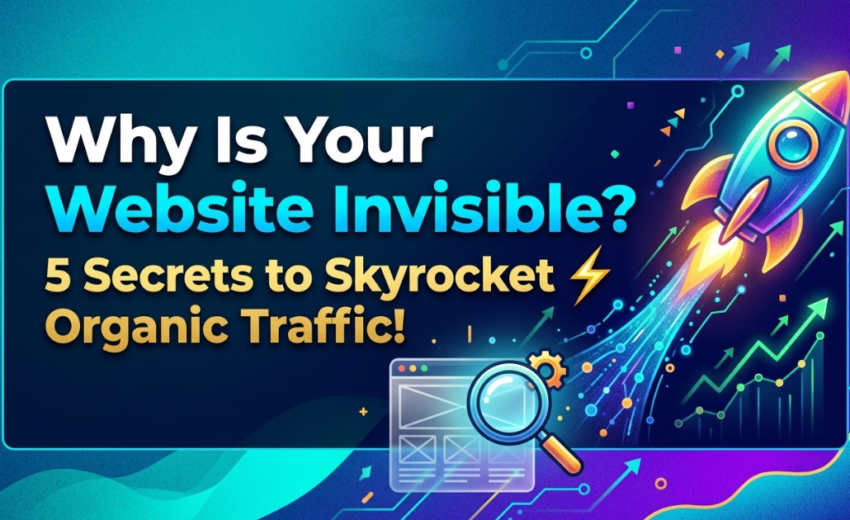
Is your website invisible on Google? Discover the hidden secrets to skyrocket organic traffic and turn your online presence into a sales machine. Proven tips for 2026!
Why Is Your Website Invisible?
Your website invisible to Google isn’t bad luck — it’s a fixable gap between where you are and where your ideal customers are searching. According to AIOSEO, most small business sites miss organic traffic not from lack of effort, but from targeting the wrong signals entirely. The Visibility Gap is real, and closing it requires more than publishing content and hoping for clicks.
Ranking in competitive markets like the USA and UK demands a strategic, data-driven roadmap. The five secrets ahead will show you exactly where to start.
Secret 1: Target Long-Tail Keywords
Most small businesses chase broad, high-competition keywords — and lose. A smarter path to organic traffic is targeting long-tail keywords: specific, intent-rich phrases that signal exactly what a searcher wants right now.
Consider the difference:
- “web design” — millions of competitors
- “affordable web design for small bakeries in Austin” — a motivated buyer with their wallet open
According to Neil Patel, long-tail keywords consistently drive higher conversion rates because they match search intent psychology — the real reason behind every query.
Why this works strategically:
- Lower competition means faster rankings
- Specific queries attract visitors closer to a buying decision
- Compounding effect: dozens of targeted pages build authority over time
In practice, one well-optimized page answering a precise question outperforms ten generic pages fighting for the same broad term. That’s a data-driven ROI win over vanity metrics every time.
The businesses that dominate search aren’t the biggest — they’re the most relevant to exactly what their customer typed.
Even your website’s conversion potential multiplies when visitors arrive already convinced they’re in the right place.
Long-tail targeting is just the beginning — but understanding why these keywords work so powerfully sets the foundation for everything ahead.
The Benefits of Long-Tail Keywords
Targeting long-tail keywords isn’t just a tactical workaround — it’s a proven strategy to skyrocket traffic from visitors who are genuinely ready to act. According to Better Marketing, one of the biggest reasons websites stagnate is targeting terms too broad to compete on. Long-tail keywords flip that dynamic entirely.
Why they work:
- Lower competition — fewer businesses target specific phrases
- Higher purchase intent — searchers know exactly what they want
- Better conversion rates — qualified traffic outperforms raw volume every time
Long-tail keywords directly shrink your Visibility Gap by matching search intent precisely. A visitor searching “affordable logo design for bakeries in Austin” is far closer to hiring someone than one searching “logo design.”
In practice, strategic ranking improvements compound over time — each long-tail page you optimize builds cumulative authority. Of course, keyword research alone won’t fix everything. Even perfectly optimized content stays invisible if Google can’t properly crawl and index your site — which is exactly what the next section addresses.
Secret 2: Audit Your Site for Indexing Issues
Long-tail keywords won’t generate SEO traffic if Google can’t find your pages in the first place. Indexing issues are one of the most overlooked visibility killers — and they’re surprisingly common.
What typically happens is that crawl errors, orphaned pages, or misconfigured robots.txt files silently block search engines from reading your content. According to AIOSEO, many small business sites suffer from indexing gaps without ever realizing it.
Quick audit checklist:
- Search
site:yourdomain.comin Google to see how many pages are indexed - Check Google Search Console for crawl errors and “Excluded” pages
- Verify your
robots.txtisn’t accidentally blocking key pages - Ensure critical pages have proper canonical tags
A solid technical foundation is non-negotiable — every content effort compounds faster when search engines can reliably access and understand your site structure.
Fixing indexing problems is one of the highest-ROI moves available. However, even perfectly indexed pages can stall if deeper technical issues remain unresolved — which is exactly what the next section addresses.
Common Indexing Problems
Once you understand that website visibility hinges on Google’s ability to crawl and index your pages, the next step is identifying exactly where the process breaks down. Several recurring issues quietly sabotage even well-designed sites:
- Blocked resources in robots.txt — accidentally disallowing crawlers from key pages or CSS/JS files
- Noindex tags left in place — often forgotten after staging site migrations
- Orphaned pages — content with no internal links pointing to it, leaving crawlers with no path to follow
- Duplicate content — confusing search engines about which version to index and rank
A common pattern is that small businesses fix their content strategy first, yet still see no rankings — because their indexing foundation was broken from the start.
Addressing these technical gaps isn’t just housekeeping; it’s a direct ROI multiplier. Once crawlability issues are resolved, every other SEO effort compounds faster. And speaking of compounding — even perfectly indexed pages can lose ground over time, which is exactly what the next secret tackles.
Secret 3: Update Outdated Content
Fixing indexing issues gets your pages seen — but what happens when Google finds your content and still doesn’t rank it? Stale, outdated content is a silent traffic killer. One practical approach to increase organic traffic is treating your existing content library as a renewable asset rather than a finished product.
Why content ages faster than you think:
- Outdated statistics signal low authority to both Google and readers
- Broken links erode trust and damage crawl equity
- Shifting search intent means yesterday’s answer no longer satisfies today’s query
According to How to Increase Traffic to Your Blog in 2025, refreshing existing posts consistently outperforms publishing new content for driving sustainable ranking improvements.
Refreshed content bridges the gap between what you’ve already built and what searchers actually need right now.
A common pattern is targeting posts ranking on page two — positions 11–20. These pages have existing authority; they just need updated information, stronger on-page signals, and alignment with current search intent to break into page one. That’s a data-driven ROI play with far less effort than starting from scratch. And as you’ll see next, the specific benefits of this refreshing strategy go even deeper than rankings alone.
Benefits of Content Refreshing
Updating stale content isn’t just maintenance — it’s one of the fastest ways to boost website traffic without building anything from scratch. When you refresh existing pages, you’re signaling to Google that your site is actively maintained and authoritative.
Key advantages of a content refresh strategy include:
- Improved rankings — Updated content better matches evolving search intent
- Higher click-through rates — Fresh publication dates attract more clicks in competitive SERPs
- Stronger topical authority — Adding new data and insights deepens your expertise signals
“Refreshed content consistently outperforms new content in competitive markets because Google already trusts the page’s history.”
In practice, even minor updates — replacing outdated statistics, expanding thin sections, or clarifying ambiguous headings — can produce measurable ranking improvements within weeks. The ROI here is direct: you’re converting underperforming assets into traffic drivers without the time investment of a new post.
Of course, content quality alone won’t carry your visibility. How your site performs on the device most of your audience uses is equally critical — and that’s exactly where the next secret comes in.
Secret 4: Enhance Mobile Experience
Your refreshed content won’t matter if users — or Google — can’t properly experience it on a smartphone. Mobile optimization is no longer optional; it’s a direct SEO visibility driver. Google’s mobile-first indexing means the mobile version of your site is your site, as far as rankings are concerned.
A common pattern in underperforming small business websites is a jarring gap between desktop polish and mobile chaos — slow load times, cramped text, and broken layouts that send visitors straight back to the search results.
Key mobile experience improvements to prioritize:
- Page speed on mobile — Compress images, eliminate render-blocking scripts, and leverage browser caching
- Responsive design — Ensure layouts adapt fluidly to all screen sizes
- Tap-friendly navigation — Buttons and links spaced for thumbs, not cursors
- Readable typography — Minimum 16px font size without requiring zoom
As these mobile traffic strategies demonstrate, even incremental mobile improvements compound into meaningful ranking gains over time.
A fast, frictionless mobile experience isn’t a technical nicety — it’s the foundation every other SEO improvement builds upon.
Once your mobile experience is solid, the next logical question becomes: are you actually reaching the right audience with the right content?
Mobile Optimization Techniques
If you’ve ever asked, “why is my website invisible to potential customers?” — a broken mobile experience is frequently the culprit. Google’s mobile-first indexing means your smartphone version is the version that gets ranked, not your desktop layout.
Key techniques to close the mobile visibility gap:
- Compress images to reduce load time below 3 seconds
- Use responsive design so layouts adapt across all screen sizes
- Eliminate intrusive pop-ups that trigger Google’s interstitial penalty
- Audit tap targets — buttons must be large enough for thumbs
Faster mobile pages directly reduce bounce rates, and lower bounce rates signal relevance — which Google rewards with higher rankings.
Once your mobile foundation is solid, the next powerful lever involves how your pages connect to each other — and that’s where strategic internal linking transforms isolated content into a cohesive authority network.
Secret 5: Utilize Internal Links
Internal linking is one of the most underutilized yet powerful tools in your SEO arsenal — and it’s entirely within your control. Think of internal links as a roadmap that guides both users and search engine crawlers through your site’s most valuable content.
Among the 5 ways to boost organic traffic, strategic internal linking consistently delivers compounding returns. Here’s why it works:
- Distributes link equity — Passes authority from high-ranking pages to those needing a visibility boost
- Reduces bounce rate — Keeps readers engaged longer by surfacing relevant content
- Improves crawlability — Ensures Google discovers and indexes every important page
“A well-linked site architecture signals topical authority — telling search engines exactly which pages matter most to your audience.”
In practice, anchor text matters enormously. Use descriptive, keyword-rich phrases instead of generic “click here” labels. One practical approach is auditing your top-performing pages and identifying natural opportunities to link outward to supporting content.
However, avoid over-linking. Stuffing too many internal links dilutes their value and creates a cluttered reading experience. Aim for two to four contextual links per post, prioritizing relevance over volume.
Done strategically, internal linking strengthens your site’s entire content ecosystem — which pairs perfectly with how you structure navigation for maximum crawlability.
Effective Internal Linking Practices
Knowing how to make website visible in search isn’t just about external SEO tactics — it starts with how well your pages connect to each other. Effective internal linking distributes authority across your site, guides visitors deeper into your content, and signals topical relevance to search engines.
Here’s what typically works:
- Link contextually — anchor text should describe the destination page naturally, not rely on generic phrases like “click here”
- Prioritize high-value pages — funnel link equity toward your most conversion-critical content
- Fix orphan pages — pages with zero internal links are practically invisible to crawlers
“A strategically linked website doesn’t just rank better — it converts better, turning passive visitors into engaged prospects.”
In practice, aim for 3–5 relevant internal links per post. This keeps crawl paths clean and reinforces your site’s topical authority in competitive markets. Of course, even a perfectly linked site can face challenges — which we’ll explore next.
Limitations and Considerations
SEO isn’t a magic switch — and understanding its boundaries is just as strategic as knowing its strengths. Sustainable organic growth requires realistic expectations alongside the right tactics.
A few honest caveats worth keeping in mind:
- Results take time. Organic traffic typically takes 3–6 months to build momentum, even with technically sound execution.
- Competition varies. High-competition markets like the USA and UK demand deeper search intent alignment — not just keyword volume.
- Algorithm shifts happen. What works today may need recalibration tomorrow; adaptability is non-negotiable.
- No single fix dominates. Internal linking, content quality, and technical health all work together — isolated tactics rarely move the needle alone.
The biggest mistake small businesses make is optimizing for vanity metrics instead of conversion-driving visibility. Sustainable ROI comes from treating SEO as an integrated system, not a checklist. With that grounded perspective in place, let’s consolidate the most actionable insights from everything covered into clear, conversion-focused takeaways.
Key Takeaways
Website invisibility isn’t random — it’s a fixable pattern. Here’s a consolidated snapshot of the strategic insights covered throughout this article:
- Search intent alignment beats keyword stuffing every time — match your content to why users search, not just what they type
- Technical SEO foundations (Core Web Vitals, mobile optimization, crawlability) must be resolved before content strategies can gain traction
- Internal linking creates authority pathways that distribute ranking power across your entire site
- Realistic timelines matter — sustainable organic growth typically requires 3–6 months of consistent effort before measurable results emerge
- Data-driven decisions outperform gut instinct — tracking conversions, not just traffic volume, reveals true ROI
Visibility gaps exist for predictable reasons — and predictable problems have repeatable solutions. The businesses winning organic search in competitive markets like the US and UK aren’t guessing; they’re systematically eliminating each barrier layer by layer.
With these fundamentals locked in, the natural next question becomes: how do you actively accelerate that growth?
How to Increase Organic Traffic to a Website?
With the key takeaways fresh in mind, here’s the actionable breakdown — a prioritized list of moves that drive real, measurable organic growth:
- Fix search intent alignment first — match your content to what users actually want, not just what you want to rank for
- Build topical authority through content clusters, not isolated pages
- Earn quality backlinks from relevant, trusted sources in your niche
- Optimize technical fundamentals — crawlability, page speed, and mobile experience
- Refresh underperforming content regularly to recapture lost rankings
Sustainable organic traffic isn’t built in a sprint — it’s engineered through consistent, intent-driven decisions compounded over time. Each fix you implement layers onto the next, creating a compounding visibility advantage that’s difficult for competitors to replicate quickly.
Why Is My Website Invisible?
Website invisibility rarely has a single cause — it’s typically a compounding visibility gap created by several overlapping issues firing simultaneously. Here’s a sharp diagnostic checklist:
- Search intent mismatch — Your content answers the wrong question for the right keyword
- Technical crawl blocks — Noindex tags, slow load speeds, or broken sitemaps prevent Google from indexing pages entirely
- Zero authority signals — Without quality backlinks, even well-written content struggles to surface in competitive markets
- Thin or duplicate content — Pages lacking depth get filtered out before rankings are assigned
- Keyword targeting errors — Chasing high-volume terms without assessing realistic ranking difficulty burns resources with no return
Invisibility isn’t bad luck — it’s a diagnostic problem with a strategic solution. Each barrier above is measurable and reversible when addressed systematically.
The good news? Identifying which combination of issues applies to your site is half the battle. Once that’s clear, the fixes become straightforward and prioritized.
If you’re starting from scratch with zero traffic, the path forward looks slightly different — and that’s exactly what the next section addresses.
How to Raise the Organic Traffic of a New Website From 0?
Starting from zero feels daunting — but it’s actually a strategic advantage. You’re building with intent, not untangling legacy mistakes.
Here’s the prioritized launch sequence:
- Target long-tail, low-competition keywords first — New sites can’t out-muscle established domains on broad terms. Niche-specific, intent-driven queries are winnable early.
- Publish consistently, not sporadically — A common pattern is that Google rewards publishing cadence with faster crawl frequency.
- Build topical authority clusters — Group related content around one core topic to signal deep expertise.
- Earn foundational backlinks — Guest posts, directory listings, and niche forums create early domain credibility.
New websites that focus on search intent psychology over keyword volume consistently outpace competitors chasing traffic vanity metrics.
This structured foundation sets up the bigger question: what method truly consolidates all these moving parts into unified AI-era visibility?
What Method Really Works for the Whole AI Visibility?
AI-driven search is reshaping how websites get discovered — and the strategies that worked in 2022 are quickly becoming obsolete. Closing your visibility gap in this new landscape requires a unified approach, not scattered tactics.
Here’s what actually moves the needle:
- Answer questions directly — AI engines like ChatGPT and Google’s AI Overviews pull concise, authoritative answers. Structure content around clear Q&A formats.
- Build topical authority — Cover subjects comprehensively across multiple pages, signaling deep expertise to both AI crawlers and human readers.
- Earn credible mentions — AI models favor brands cited across trusted sources. Consistent PR, guest posting, and citations compound your authority signal.
- Prioritize search intent psychology — Match content precisely to what users actually want, not just what they type.
The websites winning AI visibility aren’t gaming algorithms — they’re genuinely becoming the best answer available. That shift in mindset is what separates sustainable organic growth from short-lived ranking spikes.
And here’s the practical reality: most of this doesn’t require massive budgets. Which raises a question worth exploring — do you actually need to spend thousands to compete?
Do I Actually Need to Pay Thousands of Dollars to Rank?
The short answer: no. Sustainable organic traffic is built on strategy, not budget size.
Here’s what actually moves the needle — without draining your wallet:
- Fix technical foundations first — crawlability, Core Web Vitals, and mobile optimization cost nothing but time
- Target intent-matched keywords — long-tail phrases with clear search intent outperform expensive broad terms
- Publish consistently — a disciplined content calendar beats sporadic high-budget campaigns every time
- Earn links naturally — helpful, shareable content attracts backlinks organically
Visibility isn’t purchased — it’s engineered through disciplined, data-driven decisions that compound over time.
The five secrets covered throughout this article aren’t theoretical. They represent a strategic roadmap specifically designed to close the Visibility Gap that keeps small businesses invisible in competitive markets like the USA and UK. Prioritize ROI over vanity metrics, align every optimization with real user intent, and treat organic growth as infrastructure — not a one-time campaign. Your website’s breakthrough doesn’t require a massive agency retainer. It requires clarity, consistency, and commitment to the fundamentals that search engines genuinely reward in 2026.