
Discover why using Facebook Ads Manager instead of boosting posts can drive real sales. Learn the drawbacks of the Boost button and optimize your advertising strategy.
The Drawbacks of Boosting Posts on Facebook
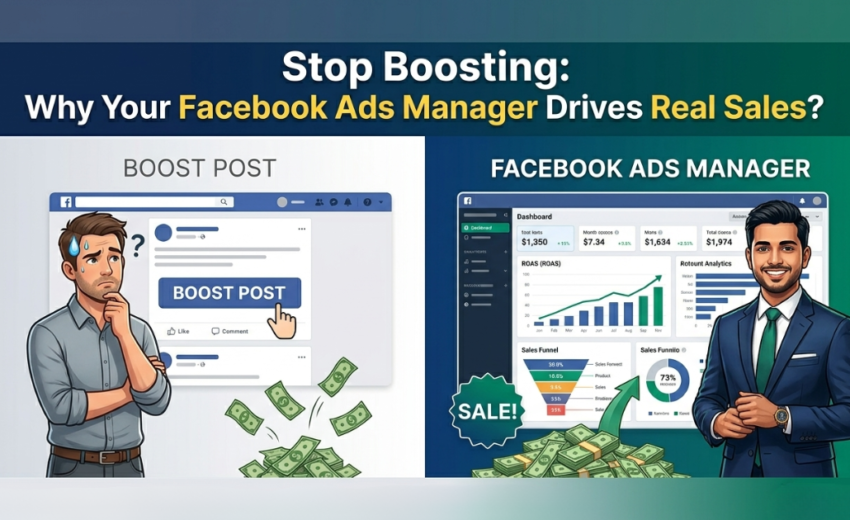
That bright blue “Boost Post” button looks tempting, doesn’t it? One click, a quick budget selection, and you’re advertising. But here’s the uncomfortable truth: boosting posts is costing you real sales opportunities. While it might generate a few likes and comments, those vanity metrics rarely translate into customers walking through your door or filling your inbox with inquiries.
The fundamental problem? Boosting was designed for simplicity, not sophistication. You’re limited to basic audience targeting, generic objectives, and surface-level metrics that mask what’s actually happening with your ad spend. Research consistently shows that businesses relying solely on boosted posts see significantly lower returns compared to structured campaigns built in Facebook Ads Manager.
Think about it: when you boost a post, you’re essentially asking Facebook’s algorithm to do your strategic thinking for you. You can’t access advanced pixel tracking, create custom conversion funnels, or implement retargeting sequences that nurture prospects through the buying journey. You’re trading precision for convenience—and your bottom line pays the price.
The platform steers you toward engagement rather than conversions, because that’s easier to deliver. But engagement doesn’t pay your bills.
Comparing Facebook Ads Manager and Post Boosting
Think of boosting posts as buying a lottery ticket—quick, simple, but largely a gamble. Facebook Ads Manager, on the other hand, is like having architectural blueprints for a precision-engineered sales machine.
The fundamental difference? Control and objective alignment. When boosting posts, you’re essentially paying to amplify content that wasn’t designed for conversion. You select basic demographics, set a budget, and hope for engagement. Research shows that whilst social advertising can drive action, the effectiveness depends heavily on strategic targeting and ad structure—precisely what boosting lacks.
Ads Manager transforms this approach entirely. Rather than chasing vanity metrics like shares, reactions, you architect campaigns around business outcomes: website purchases, lead generation, and or app installations. You access over 200 targeting parameters, sophisticated pixel tracking, and conversion optimisation algorithms that actually learn what drives results for your specific audience. A direct comparison study revealed that strategically built ad campaigns consistently outperform boosted posts in cost-per-conversion and overall ROI. The difference isn’t marginal—it’s transformational when you’re measuring what actually matters to your bottom line.
Advanced Targeting Capabilities of Facebook Ads Manager
Here’s where Facebook Ads moves from guesswork to surgical precision. Whilst boosting offers rudimentary age and location filters, Facebook Ads Manager unlocks targeting layers most advertisers never touch—and that’s precisely why they leave money on the table.
Want to reach 35-year-old homeowners who’ve recently engaged with interior design content and visited your website in the past 30 days? Done. Need to exclude previous customers whilst targeting people who abandoned their shopping carts? That’s standard operating procedure in Ads Manager. According to Facebook Ads analytics research, this platform allows you to layer demographic, behavioural, and psychographic data to create audience segments so specific they feel like individual conversations.
The real power emerges with Custom Audiences and Lookalike Audiences. Upload your customer email list, and Facebook identifies similar high-value prospects across its 2.9 billion users. This isn’t vanity metrics territory—it’s revenue-focused targeting that transforms strangers into qualified leads.
Contact Tanmoy Biswas for Facebook Ads with the most affordable price.
Boosting posts? You’re casting a wide net and hoping. Facebook Ads Manager? You’re spearfishing for customers already inclined to buy, dramatically improving your return on ad spend before you’ve written a single word of copy.
Optimising for Conversions and ROI
Here’s the brutal truth: boosted posts optimise for engagement, whilst Ads Manager optimises for revenue. This isn’t semantics—it’s the difference between accumulating likes and generating qualified leads.
When you boost a post, Facebook’s algorithm prioritises users likely to react, comment, or share. Surface-level metrics that feel good but rarely translate to sales. Ads Manager flips this entirely, allowing you to optimise campaigns for conversion events—form submissions, product purchases, consultation bookings—actions that directly impact your bottom line.
The data backs this up. Research comparing social advertising effectiveness found that conversion-optimised campaigns consistently outperform engagement-focused alternatives in driving measurable business outcomes. By installing the Facebook Pixel and defining specific conversion goals, you’re instructing the algorithm to find users predisposed to buy, not just browse.
This precision targeting dramatically improves Return on Ad Spend (ROAS). Rather than casting wide nets and hoping for results, you’re investing budget into high-intent audiences identified through behavioural signals, past purchase patterns, and website interactions. One practical approach is testing multiple conversion events—add-to-cart versus purchase completion—to identify which objective delivers the strongest returns for your specific funnel stage.
However, this sophistication requires proper tracking infrastructure. Without accurate conversion tracking, even Ads Manager becomes guesswork.
Common Misconceptions About Boosting Posts
Here’s the cognitive trap most business owners fall into: they assume boosting is “simplified Ads Manager”—a streamlined version designed for smaller budgets. In reality, it’s a fundamentally different product with artificial limitations baked in.
The first misconception? That boosting reaches “everyone who matters.” What actually happens is Facebook’s algorithm prioritizes users who engage readily but rarely convert—the scrollers, not the shoppers. A Hoist case study comparing identical budgets showed boosted posts generated 80% more reactions but 53% fewer conversions than structured campaigns through Ads Manager.
The second fallacy: “Ads Manager is too complicated.” Whilst the interface offers more controls, the framework isn’t complex—it’s comprehensive. You’re not navigating rocket science; you’re answering strategic questions: Who converts? Where in the buyer’s journey? What specific action matters? These aren’t obstacles; they’re the exact variables that transform £500 monthly spend from vanity metrics into measurable revenue.
The reality? Boosting feels easier because it asks fewer questions, not because it delivers better results.
Example Scenarios: When Boosting May Be Useful
Here’s the nuanced reality: the Boost button isn’t always wrong—it’s just wrong for revenue-focused objectives. There are precisely three scenarios where boosting makes strategic sense, and they all share one characteristic: they prioritise brand awareness over conversion tracking.
Event announcements represent the clearest use case. A local restaurant promoting tonight’s live music to followers within five miles doesn’t need pixel tracking or sequential retargeting—they need immediate reach. Similarly, time-sensitive community updates (charity fundraisers, urgent notices, local initiatives) benefit from boosting’s speed advantage when the window for action is measured in hours, not days.
The third scenario? Pure brand visibility campaigns where engagement genuinely is the metric that matters. A creative agency showcasing portfolio work or a consultant building thought leadership may legitimately optimise for reactions and shares rather than website conversions.
What unites these scenarios is a critical constraint: you’re sacrificing attribution data for immediacy. That’s acceptable when your goal is impressions, not revenue. However, the moment your objective shifts to “generating qualified leads” or “driving online sales,” you’ve crossed the threshold where boosting becomes counterproductive—and Ads Manager becomes non-negotiable.
How to Transition from Boosting to Using Ads Manager
Here’s the psychological barrier most business owners face: Facebook boosting feels safe because it’s familiar. The transition to Ads Manager feels like abandoning a comfortable routine for unfamiliar complexity. However, research demonstrates that structured ad campaigns significantly outperform boosted posts in both engagement quality and conversion rates—making the short learning curve worth the investment.
The practical transition requires just three steps. First, audit your last five boosted posts—identify which objectives you thought you were achieving (brand awareness? sales? engagement?) versus what actually happened. Second, spend 15 minutes exploring Ads Manager’s campaign creation interface without launching anything; familiarize yourself with the objective categories. Third, replicate your best-performing boosted post as a proper campaign with a specific conversion goal, matching creative and copy but leveraging precise targeting parameters unavailable through Facebook boosting.
What typically happens next surprises most advertisers: within the first week, you’ll notice higher-quality interactions from users genuinely interested in your offer—fewer random engagements, more meaningful click-throughs. The shift isn’t about working harder; it’s about working strategically with tools designed for measurable business outcomes rather than vanity metrics.
Step-by-step: Setting Up Your First Campaign in Ads Manager
The transition away from post boosting begins with your first proper campaign structure. Open Ads Manager and click “Create”—you’ll immediately notice three campaign levels: Campaign, Ad Set, and Advert. This hierarchy is where your strategic control lives.
At the Campaign level, choose your objective wisely. For sales-focused goals, select “Sales” (for e-commerce) or “Leads” (for service businesses). This single choice fundamentally alters Facebook’s optimization algorithm—unlike boosting, which defaults to engagement regardless of your actual business needs.
Move to the Ad Set level: here’s where precision targeting replaces guesswork. Define your audience by location, age, demographics, and interests, then layer in Custom Audiences from your customer data. Set your daily budget (start with £10-20 for testing) and choose manual placements—untick Instagram Stories if your creative isn’t optimized for vertical format.
At the Advert level, craft multiple variations testing different headlines, images, and calls-to-action. Upload fresh creative rather than simply promoting an existing post. Include your Facebook pixel tracking URL parameters to measure actual conversions, not just clicks. This structured approach transforms random post boosting into a measurable sales system.
Read More: Affordable Web Design: High Quality Without the Big Price?
Limitations and Considerations of Facebook Ads Manager
Ads Manager isn’t a magic button—it’s a professional tool that demands professional handling. The platform’s complexity can overwhelm newcomers; research shows that effective campaign management requires understanding audience segmentation, ad creative testing, and conversion tracking simultaneously. What takes five minutes with boosting might take thirty minutes in Ads Manager initially.
The learning curve translates to time investment. You’ll need to study campaign objectives, master custom audience creation, and interpret analytics dashboards that display dozens of metrics. Many business owners underestimate this commitment, expecting immediate proficiency.
Budget management becomes entirely your responsibility. While boosting caps your spend automatically, Ads Manager requires you to monitor daily budgets, lifetime budgets, and bid strategies across multiple ad sets. A misconfigured campaign can exhaust your monthly budget in hours if you’re not vigilant.
The platform also assumes a baseline of marketing knowledge. Terms like “conversion windows, ” “attribution settings, “, and “optimization events” aren’t explained in beginner-friendly language. Without proper training or guidance, these technical requirements can sabotage even well-intentioned campaigns before they generate results.
Key Takeaways
Boosting posts feels simple, but simplicity costs you sales. The convenience of that blue button trades sophisticated targeting for surface-level engagement—likes and shares that rarely translate to revenue. Ads Manager, despite its steeper learning curve, delivers the granular control that drives measurable business outcomes.
Your marketing budget deserves strategic architecture, not one-click impulse decisions. Campaign objectives aligned with conversion goals, custom audience layering, and placement optimisation aren’t optional extras—they’re fundamental requirements for profitable advertising. Research confirms that structured campaigns with clear conversion pathways significantly outperform engagement-focused approaches.
The shift from boosting to proper campaign management represents a mindset change: from chasing vanity metrics to engineering high-quality traffic that actually converts. Your pixel tracking, retargeting sequences, and split-tested creative become revenue-generating assets rather than afterthoughts.
The question isn’t whether Ads Manager is more complex—it absolutely is. The question is whether you’re serious about Return on Ad Spend or content with superficial engagement that doesn’t pay the bills.
Can you realistically expect sales using “Boost Post”…
Honest answer: occasionally, but inefficiently. Boosted posts can generate sales—especially for impulse purchases or familiar brands—but they’re fundamentally designed for visibility, not conversion. One practical approach is treating boosted posts as the appetiser, not the main course. They work when your product requires minimal consideration, your audience already trusts you, and the purchase decision happens instantly. However, research shows that campaign-driven advertising significantly outperforms boosted content when actual sales metrics are measured.
The cost per acquisition tells the real story. What typically happens is businesses spend £50 boosting posts, see promising engagement, then wonder why their payment processor stays quiet. That’s because engagement doesn’t automatically translate to commercial intent. A like costs pennies; a customer costs pounds. Boosted posts optimise for the former whilst you desperately need the latter. For businesses serious about revenue rather than vanity metrics, Ads Manager’s conversion-focused campaigns consistently deliver lower cost per acquisition and higher return on ad spend.
How to Actually Run Effective Facebook Ads
Stop experimenting with the blue button—start systematically building sales machines. Moving from boosted posts to Ads Manager isn’t complicated; it requires commitment to a process that treats advertising as strategic investment, not spontaneous promotion.
Begin with clear conversion objectives tied to business outcomes: purchases, lead submissions, consultation bookings. Install the Meta Pixel properly to track these actions across your website. Build custom audiences from your existing customer data, website visitors, and engaged users—these warm audiences consistently outperform cold targeting by 2-3x in conversion rates.
Create dedicated ad creative (not recycled organic posts) with clear value propositions and specific calls-to-action. Test multiple variations simultaneously using proper A/B testing frameworks that isolate single variables. Allocate modest budgets to learning phases, then scale winners aggressively whilst maintaining healthy cost-per-acquisition ratios.
The difference between vanity metrics and revenue isn’t technical mastery—it’s disciplined focus on outcomes that deposit money in your bank account. Your competitors are still clicking that boost button. You’re building systems that consistently deliver quality traffic, measurable conversions, and predictable ROAS. That’s not just better advertising; it’s sustainable competitive advantage.

March 28, 2026