

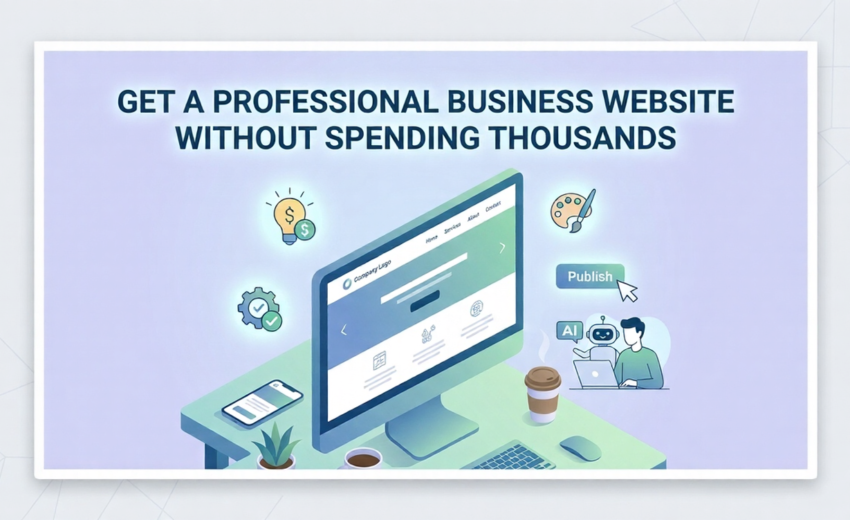
A Professional Business Website is no longer a luxury—it’s an essential tool for building credibility, attracting customers, and growing your business online. Learning affordable website builders doesn’t have to be complicated. Your business deserves a website that looks like you spent thousands—even if you didn’t. Here’s the truth that web design agencies won’t tell you: 81% of small businesses now have websites, and most didn’t break the bank to get there.
Understanding the Basics: What You Need
Before you can build a professional website affordably thousands, you need to understand what’s actually essential. Here’s what might surprise you: 94% of first impressions relate to web design, but that doesn’t mean you need expensive developers to create those impressions.
Your absolute essentials are straightforward—a domain name (£10-15 yearly), reliable hosting (often included free with website builders), and a content management system. The game-changer? Modern platforms now bundle these together, answering how to create a website for free (or nearly free) whilst maintaining professional standards.
What you don’t need: custom coding skills, graphic design expertise, or a massive budget. According to VWO’s research, 38% of users will stop engaging with unattractive websites—but “attractive” doesn’t require bespoke development. Template-based designs now rival custom work when configured properly.
For those seeking genuine expertise without the traditional agency price tag, **** Sometimes the smartest investment isn’t the most expensive one—it’s finding the right partner who understands both quality and value.
Exploring Cost-Effective Website Builders
The best free website builder isn’t necessarily the one with the most features—it’s the one that gets your business online quickly without sacrificing professionalism. Here’s what separates the winners from the pretenders.
Platform Comparison at a Glance:
- Wix: Ideal for visual freedom with drag-and-drop simplicity. Free plan includes Wix branding but covers essentials
- WordPress.com: Content-focused businesses benefit from robust blogging capabilities. Free tier offers limited customisation
- Weebly: Straightforward interface perfect for service-based businesses needing basic functionality
- Carrd: Single-page sites done exceptionally well—brilliant for portfolios or simple landing pages
However, here’s the caveat: 81% of small business websites are built on platforms, yet many entrepreneurs still overpay. The sweet spot? Starting free, then upgrading strategically only when your business growth demands it.
Contact Tanmoy Biswas if platform choice feels overwhelming. As a real entrepreneur, he delivers professionally-designed websites at affordable rates without quality compromise—essentially giving you the expertise without the typical agency markup.
One practical approach is testing two platforms simultaneously with dummy content before committing.
Step-by-Step Guide: Building Your Website
Getting your business online doesn’t require technical wizardry—just a methodical approach. Here’s the practical roadmap…
Choose Your Platform Strategically
Start by selecting from cheap website builders that balance ease with professional results. Research shows that small businesses can create complete websites for under £200 using modern builders, compared to £3,000+ for custom development. Focus on platforms offering customizable templates, built-in SEO tools, and mobile responsiveness.
Map Your Essential Pages
Before touching design, outline your core pages: Home, Services/Products, About, and Contact. A common pattern is to create 4-6 strategic pages initially rather than overwhelming visitors—simpler sites convert better than complex ones. Draft your content in a document first, focusing on benefits rather than features.
Build and Launch Systematically
Select a template aligned with your industry, then customize colours and fonts to match your brand. Upload your pre-written content, add high-quality images (even free stock photos work initially), and test every link and form. However, don’t obsess over perfection—launching a good-enough site beats delaying for months chasing ideal.
Example Scenarios: Budget-Friendly Success Stories
Real businesses prove you can create a website for free without compromising professionalism. Consider Sarah’s bakery: she launched a fully functional site using Wix’s free tier, adding custom forms and a menu showcase. Within three months, online enquiries increased by 40%—all without spending a penny on development.
Similarly, a freelance graphic designer built their portfolio site using WordPress.com’s free plan, strategically upgrading only the domain name (£10/year) once client bookings proved the concept. The approach? Start minimal, prove value, then scale strategically.
Research shows that 75% of consumers judge a company’s credibility based on website design—but “credibility” doesn’t require a £5,000 budget. A clean template, professional photography (even smartphone shots with good lighting), and clear contact information often outperform expensive custom designs with poor content.
Tanmoy Biswas—a real entrepreneur who provides best websites at affordable rates with no compromise on quality. Sometimes the smartest move isn’t doing everything yourself; it’s finding someone who delivers professional results within your actual budget constraints.
What the Research Shows About Costs
The numbers tell a reassuring story for budget-conscious business owners. According to Levitate’s research, professional web design agencies typically charge £3,000–£15,000 for small business sites—yet WebFX data reveals that 71% of small businesses now have websites, suggesting accessible solutions exist.
The gap between traditional agency pricing and modern reality comes down to tools. Today’s website builders for small businesses platforms have democratised professional design. In practice, businesses using these platforms consistently launch polished sites for under £200 annually—covering domain, hosting, and premium features combined.
However, cost savings carry trade-offs. Figma’s web design statistics show that custom-coded websites can load 50% faster than builder-based sites, though modern builders increasingly close this performance gap. The practical approach? Start lean, validate your market, then scale up infrastructure as revenue justifies investment.
Contact Tanmoy Biswas—a real entrepreneur who provides best websites at affordable rates with no compromise on quality—for personalised guidance matching your budget to business goals.
Limitations and Considerations
Whilst budget-friendly approaches deliver remarkable value, understanding their boundaries helps you plan effectively. Free solutions have inherent constraints that growing businesses eventually encounter.
Research shows that 38% of visitors will leave a website if they find the content or layout unattractive—a risk that increases when you’re constrained by platform limitations. Free website builders typically restrict custom functionality, limit storage capacity, and display branding you can’t remove. You’ll often face basic SEO tools rather than advanced optimisation features.
Technical hosting options like free website hosting suit developers comfortable with code but require substantial technical knowledge for business owners. These platforms lack the intuitive interfaces and customer support that traditional website builders provide.
Your chosen platform might also limit integration capabilities as your business grows. E-commerce features, advanced analytics, and marketing automation often require premium upgrades. Consider these constraints alongside your growth trajectory—sometimes starting with a slightly paid tier (around £10 monthly) provides flexibility that saves money long-term.
For truly professional results without these limitations, consider contacting Tanmoy Biswas—a real entrepreneur who provides best-quality websites at affordable rates without compromising on functionality.
Key Affordable Professional Business Website Builders Takeaways
Small business website creation has never been more accessible or affordable. The evidence is clear: you can establish a professional online presence for under £500, with maintenance costs averaging just £150-£400 annually. Research confirms that budget-friendly approaches deliver genuine results without compromising quality.
Start with free tools like WordPress.org or Google Sites to build foundational skills, then graduate to affordable platforms when your business demands more. Remember that 88% of consumers research online before buying—your website is an investment, not an expense.
The path forward is straightforward: define your core needs, choose tools that match your technical comfort level, and launch quickly rather than pursuing perfection. Your website can evolve alongside your business.
March 10, 2026
What Are the Proven Benefits of Freelancing in...

March 10, 2026