
Executing a high-performing Zero-Click Content Strategy has become critical as Google’s AI Overviews consume top SERP real estate and social platforms actively suppress posts with outgoing links. To adapt to this shift, forward-thinking marketers embraced native platform delivery, but pivoting without a clear architecture is quietly dissolving brand equity—turning proprietary insights into free training data for competitors while leaving readers satisfied, unengaged, and oblivious to who provided the solution. If your native engagement metrics look impressive on paper but fail to drive actual revenue, your current execution is likely bleeding market authority, making it vital to eliminate these fatal flaws and build a sustainable SEO Flywheel that converts zero-click readers into high-intent leads using a battle-tested Zero-Click search model.
Search has fundamentally shifted from a directory that sends users to websites into an answer engine that resolves questions before a single click ever happens — and most founders have not caught up.
The zero-click phenomenon is not a glitch or an algorithmic accident. It is the deliberate design direction of modern search. Google, and increasingly AI-powered search interfaces, are engineered to satisfy user intent directly on the results page. Featured snippets, knowledge panels, AI Overviews, and instant answer boxes all exist to reduce friction for the user — which means reducing traffic for you. Understanding this distinction is not optional anymore; it is the foundation of any viable Zero-Click Content Strategy in 2026.
The ‘96% invisibility’ trap is where this gets genuinely alarming for startups. 96.55% of all pages receive zero organic traffic from Google. That number is not inflated by low-quality spam sites alone. It reflects a structural reality where the vast majority of published content never earns enough authority signals, backlinks, or format alignment to surface at all. For a new brand operating with limited resources, publishing content without a tailored Zero-Click Content Strategy is not just an inefficiency — it is a slow drain on the credibility and momentum you cannot afford to waste.
The Zero-Trust Ecosystem describes what users now bring to every search session: skepticism. Before committing to a click, a reader wants to verify that a source is worth their time. They scan answers, assess brand names in snippet attributions, and form trust judgments entirely within the search results page. Your brand either appears trustworthy at zero-click distance, or it effectively does not exist in that moment. Structured data can help close that gap by making your content machine-readable for AI systems that decide what surfaces in these answer environments.
That brings us to the first and most costly mistake brands make when they finally recognize this landscape — and it involves completely misreading what a featured snippet is actually worth.
Mistake 1: Treating Featured Snippets as Lost Traffic in Your Zero-Click Content Strategy
The biggest strategic miscalculation in modern SEO content strategy is confusing a missing click with a missing opportunity — featured snippets do not steal your audience; they broadcast your authority to it.
That distinction matters more than most marketing teams realize. A user who sees your brand answer their question at the top of a search result page — before any competing result, before any ad — has received a brand impression with a credibility signal baked in. No click required. The billboard analogy holds perfectly here: you do not measure a billboard’s value by how many drivers park to read it. You measure it by how many recognize the name the next time they need what it offers.
Vanity clicks vs. brand impressions. Clicks feel measurable, so they feel real. But a click from a low-intent user who immediately bounces contributes nothing to pipeline. A featured snippet shown to a high-intent user who absorbs your answer and files your brand name under “trusted source” contributes to every future touchpoint — including the eventual conversion. Research from Semrush confirms that AI-driven search features are reshaping how visibility translates to value, and brands anchored to raw click counts are measuring the wrong outcome entirely.
The trust signal AI models actually read. This is where the stakes escalate beyond impressions alone. Platforms like Gemini and other AI discovery engines actively index featured snippets as markers of topical authority. When your content occupies that position consistently, AI models treat your domain as a credible source worth surfacing in generated answers. Avoiding snippets to “protect” your traffic does the opposite — it signals to AI systems that your content is not the definitive answer, which quietly erodes your discoverability over time.
The Billboard Effect in practice. What typically happens when a brand holds featured snippet positions across a category is a compounding authority loop: users see the brand as the answer, recall it during purchase consideration, and trust it faster at later touchpoints. And that loop depends entirely on the technical foundation supporting your Zero-Click Content Strategy — which is exactly what the next section addresses.
Mistake 2: Ignoring Technical Infrastructure in a Zero-Click Content Strategy
A flawless content strategy for SEO collapses entirely if the technical infrastructure beneath it cannot be read, trusted, or parsed by AI-powered search systems.
Most brands focus their zero-click focus on content formats — answer boxes, summaries, structured lists — while leaving the foundation cracked. But search engines and AI discovery platforms do not treat content in isolation. They evaluate the entire context in which that content lives, and a slow, structurally broken site sends a clear trust signal: do not lift this.
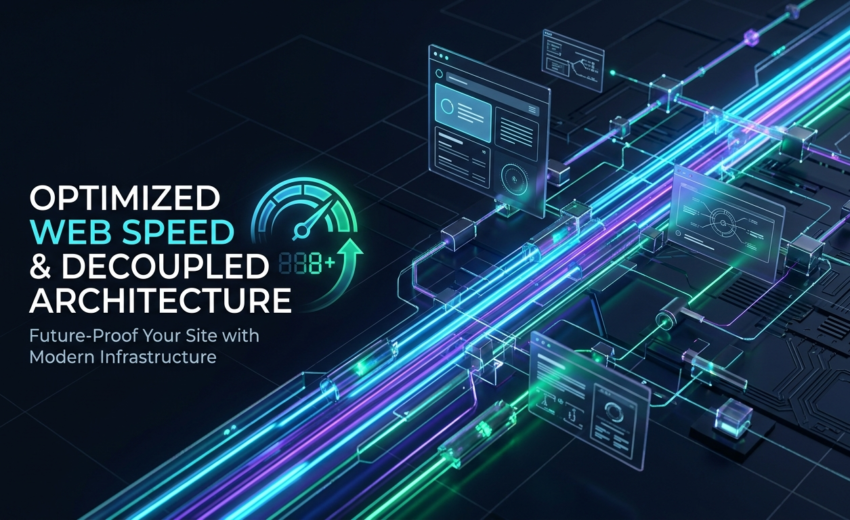
Core Web Vitals are the clearest expression of that trust signal. Google uses these metrics — Largest Contentful Paint, Interaction to Next Paint, and Cumulative Layout Shift — to assess whether a page delivers a reliable user experience. And the numbers reveal how widespread this problem is: 91% of websites have high-traffic pages failing at least one core web vitals threshold. That is not a fringe issue. It means the majority of sites are quietly disqualifying themselves from AI visibility before a single word of their content is ever considered for an answer box. If you want to understand how to close those gaps at the infrastructure level, fixing your LCP and INP metrics is the most direct path forward.
Structured data is the second overlooked layer. Schema markup translates your content into a machine-readable language that AI platforms actively parse when building knowledge graphs and generative summaries. Without it, even well-written content remains ambiguous — a search engine has to guess what your page is about rather than confirm it.
| Technical Error | Impact on Zero-Click Visibility |
|---|---|
| Failing Core Web Vitals | Page excluded from featured snippet and AI answer eligibility |
| Missing schema markup | Content not parsed by AI knowledge graph systems |
| Slow server response time | Crawl budget wasted; fresh content indexed late or not at all |
| Broken mobile rendering | Disqualified from mobile-first indexing, reducing overall authority |
Technical debt is the silent killer of brand authority because it accumulates invisibly. Each deferred fix — an uncompressed image, a missing FAQ schema, a render-blocking script — chips away at the trust signals search engines use to decide whose content gets surfaced without a click. And once a competitor earns that position in an answer box, displacing them requires not just better content, but a technically superior site.
The mistake is treating technical health as a separate workstream from your overall content roadmap. In a zero-click search environment, the two are inseparable. AI systems do not just read what you say — they evaluate whether your site is a reliable enough infrastructure to represent an answer on your behalf.
That technical credibility shapes something broader than rankings, though. It connects directly to the question of whether users trust the source behind the answer — and increasingly, they want to know not just what you know, but who you are and what you are actively building.
Mistake 3: Failing to Build Real-Time Transparency in Your Zero-Click Content Strategy
The fastest-growing trust signal in 2026 is not a polished case study or a perfectly optimized featured snippets strategy — it is radical, real-time transparency about what you are actively building.
Users are migrating to Reddit, LinkedIn, and niche social communities because those platforms answer a question that most brand websites cannot: what is actually happening right now? A common pattern is that audiences distrust static, evergreen content when they sense it has been engineered to rank rather than written to inform. According to Digiday’s reporting on zero-click behavior, small brands are finding that search traffic is redistributing toward platforms that surface opinionated, community-driven content — and polished corporate blogs are losing ground to raw, process-driven posts.
Building in public is the practice of documenting your decisions, failures, pivots, and milestones as they happen. And it creates a distinct form of zero-click authority that is difficult to replicate. When someone asks an AI assistant or search engine about a specific challenge in your niche, a well-documented project update that addresses that challenge in plain language becomes a citable, quotable asset. You are not just ranking — you are becoming the source.
The practical move is to convert project updates into a structured Zero-Click Content Strategy framework. That means:
- Titling posts around real questions your audience is asking, not internal milestones
- Including specific outcomes — numbers, timelines, decisions made — so AI systems can extract and surface them
- Publishing consistently, even briefly, so there is a corpus of dated, verifiable content that signals ongoing expertise
Faceless brands carry a compounding risk in this environment. Transparency is no longer a nice-to-have; it is a trust mechanism. Brands that cannot answer “who made this and why” are increasingly filtered out by both human audiences and algorithmic systems that weight authorship signals heavily.
And the deeper danger is not just losing traffic. It is losing the right to be cited at all — which leads directly into why clinging to outdated assumptions about how authority is built may be the most damaging mistake of all.
Mistake 4: Relying on Outdated SEO Myths Instead of a Modern Zero-Click Content Strategy
The biggest threat to your brand authority in 2026 is not a Google algorithm update — it is the collection of outdated SEO myths quietly steering your strategy toward irrelevance.
While the previous sections addressed technical gaps and content blind spots, this one targets something more insidious: the conventional wisdom that feels safe but actively works against you. Modern search has rewritten the rules, and strategies built on 2018-era assumptions are not just ineffective — they are damaging.
The Myth: Keyword density is still the primary driver of search rankings.
The Reality: Topical authority has replaced keyword frequency as the dominant ranking signal. Google’s systems now evaluate whether your content comprehensively covers a subject, not whether a phrase appears a certain number of times per hundred words. Stuffing a keyword into every other paragraph signals low expertise, not high relevance. In practice, the brands earning AI-generated citations and featured placements are those that own entire topic clusters with an integrated Zero-Click Content Strategy — not those that chase density ratios.
The Myth: AI-assisted content is penalized by Google and kills organic traffic.
The Reality: The data simply does not support this fear. 39% of marketers saw increased organic traffic when creating content with AI assistance, according to Semrush. Google has stated repeatedly that its systems reward quality and helpfulness, regardless of the production method. The penalty risk comes from thin, unhelpful content — not from AI involvement itself.
The Myth: Backlinks are the only way to build domain authority.
The Reality: Backlinks remain valuable, but they are one signal among many. Brand mentions, structured content that earns zero-click placements, author credibility, and consistent topical depth all contribute to how AI systems and search engines evaluate trustworthiness.
The Myth: Doubling down on 2018-era tactics is a safe fallback.
The Reality: Playing it safe with outdated methods is itself a high-risk move. The brands that resist updating their measurement frameworks tend to discover the damage only after the gap has widened considerably — which is exactly what the next section addresses.
Mistake 5: Failing to Measure ROI in Your Zero-Click Content Strategy
The single biggest reason founders abandon zero-click strategies too early is not a lack of results — it is a failure to measure the right signals in the first place.
Last-click attribution is a structural lie in a zero-click search environment. When a prospect reads your AI-generated answer on Monday, sees your brand mentioned in a newsletter on Wednesday, and finally searches your company name directly on Friday before booking a demo — last-click attribution hands all the credit to a branded search term and buries the actual influence chain. The content that built the trust never appears in the report. And so the content gets cut.
This measurement gap is not a minor inconvenience. Attribution is broken, but measurement is not — and tracking branded search lift over time is the key metric for proving zero-click ROI. When your content earns real authority, more people search your brand name directly. That is a measurable, trackable signal even when the click trail goes cold.
Dark Social compounds the problem. Conversations happening in Slack communities, private LinkedIn DMs, and forwarded newsletters do not show up in any dashboard. Employee advocacy — a team member sharing a zero-click-optimized article with their network — generates influence that analytics platforms categorize as direct traffic or simply lose entirely. Treating these as immeasurable is a mistake; surveying new leads on how they first heard of you remains one of the most underused and effective attribution tools available to founders.
What typically happens in high-performing brand strategies is a deliberate effort to connect zero-click impressions to pipeline events. The new metrics worth tracking in your Zero-Click Content Strategy are:
- Branded search volume growth — a month-over-month increase signals rising top-of-funnel authority driven by content that earns no clicks
- Direct traffic share — an expanding share of direct sessions indicates that audiences are beginning to seek your brand out intentionally rather than discovering it through search
- First-touch attribution from discovery channels — asking prospects “how did you first hear about us?” in demo request forms and onboarding surveys surfaces influence that no platform can capture automatically
These three signals together build a far more honest picture of what zero-click content is actually doing for your brand. Abandoning a strategy because it does not generate last-click conversions is like turning off a billboard because nobody handed the advertiser a coupon. The influence is real; the measurement framework simply has to catch up to the reality of how zero-click search has reshaped the buyer journey.
Once you have the right metrics in place, the path to aggressive market positioning becomes considerably clearer — which is exactly where the next section picks up.
Executing a 2026 Strategy for Market Dominance
In 2026, the brands that dominate search will not be the ones with the biggest ad budgets — they will be the ones that made themselves impossible to ignore on AI platforms while legacy competitors were still debating whether zero-click was a problem.
Having worked through the five major mistakes — from outdated SEO myths to broken attribution — a pattern becomes clear. Each mistake represents an opening. Every competitor still clinging to click-through rate as their north star is leaving SERP real estate uncontested. Your job is to claim it aggressively and systematically.
Aggressive content positioning starts with answering the questions your audience is actively asking AI engines right now. That means producing content that is specific, structured, and quotable — not broad think pieces designed for a 2019 content calendar. Research confirms that zero-click search is fundamentally reshaping how brands show up online, and the brands winning that visibility are publishing direct, authoritative answers at scale. Law firms, SaaS companies, and professional services providers have a particular advantage here: their subject matter expertise, when documented precisely, is exactly what AI-driven search surfaces in featured responses.
Outpacing legacy competitors is more achievable than it sounds. Many established players in competitive niches built their authority during an era when volume and backlinks drove rankings. They are slow to adapt, often operating on content workflows that cannot pivot quickly enough to match AI-indexed formats. The window to capture that gap is open now — but it will not stay open indefinitely.
The technical and authority moat work in parallel, not in sequence. Technical health — site speed, structured markup, crawlability — is the prerequisite that gets you into the game. But the actual moat is built from non-replicable brand insights: proprietary data, documented case patterns, founder-level perspective, and real-world specificity that generic content farms simply cannot manufacture. A sustainable content marketing strategy treats each piece of content as a compounding asset, not a one-time traffic play, while aligning with a broader SEO blogging methodology.
That compound effect — technical credibility meeting unique intellectual authority — is exactly what the next section’s survival guide is designed to help you operationalize.
What You Need to Know: The Zero-Click Survival Guide
Zero-click search is not a threat to your brand — it is the most underused billboard in modern digital marketing, and the brands that recognize this early will own their categories.
The anxiety around zero-click traffic tends to focus on what you lose: the visit, the session, the conversion path. But that framing misses the structural shift entirely. When your content populates an AI Overview, a featured snippet, or a knowledge panel, you are occupying prime real estate at the exact moment a user forms an opinion. That is brand-building at scale, and it happens whether or not a single click follows.
Technical health is the prerequisite, not the bonus. Before any Zero-Click Content Strategy can earn AI visibility, the underlying infrastructure has to be sound. Core Web Vitals — particularly Largest Contentful Paint and Interaction to Next Paint — function as trust signals for crawlers and AI systems alike. A slow, unstable site does not get quoted. And poor technical health quietly disqualifies even exceptional content from the SERP positions that zero-click authority depends on.
Measurement is where most strategies break down. Clicks are a lagging and increasingly unreliable proxy for brand impact. What you should be tracking instead includes:
- Branded search volume — are more users searching your name directly?
- Share of voice in AI-generated answers across your core topics
- Direct traffic lift as a downstream signal of SERP visibility
When you shift those metrics, the strategy that looked like it was failing often turns out to be working exactly as intended.
AI-assisted content is a growth lever when grounded in genuine authority. The risk is not the tool — it is the absence of a distinct perspective behind it. According to research on zero-click search behavior, brands that answer specific, direct user queries with clarity and depth are the ones that get surfaced repeatedly. Building in public — documenting decisions, sharing progress, answering questions your audience is actively asking — bypasses traditional SEO gatekeepers entirely and creates a compounding authority loop that paid media cannot replicate.
The foundation is set. What it takes to scale that foundation into lasting dominance is worth examining closely.
Scaling Your Authority with a Growth Strategist
Winning in the zero-click era requires more than tactical adjustments — it demands a complete infrastructure built on technical SEO precision and a brand identity strong enough to earn recognition without a single click.
The two forces are inseparable. Technical execution without a distinctive brand voice produces visibility that nobody remembers. A compelling brand without the structural signals — schema markup, entity optimization, Core Web Vitals — never surfaces where decisions are made. What the previous sections of this article have mapped out, collectively, is a single truth: a well-executed Zero-Click Content Strategy benefits brands that have done the foundational work long before any search query is typed.
The infrastructure question is where most brands stall. Building for zero-click search dominance means investing in systems that generate authority passively — featured snippets, knowledge panels, AI-generated answers — rather than chasing traffic spikes that evaporate after a campaign ends. That shift in orientation is not simple. It asks brands to move away from vanity metrics like raw click volume and toward indicators that actually reflect market position: branded search growth, share of voice in AI-generated responses, and citation frequency across authoritative sources. These numbers are harder to explain in a monthly report. But they are the numbers that compound over time.
That trade-off is worth naming honestly. Committing to this approach means accepting a period where the dashboards look quieter while the real infrastructure takes shape beneath the surface. The brands that make that commitment in 2026 are the ones that will be structurally difficult to displace by 2027 and beyond.
Tanmoypro exists to build that infrastructure — blending technical depth with the brand strategy required to make zero-click search function as a growth channel, not just a visibility exercise. If you are ready to scale your digital presence for the next era of search, start the conversation here.

September 7, 2026